Online vs In-Person Tutoring: An Honest Comparison
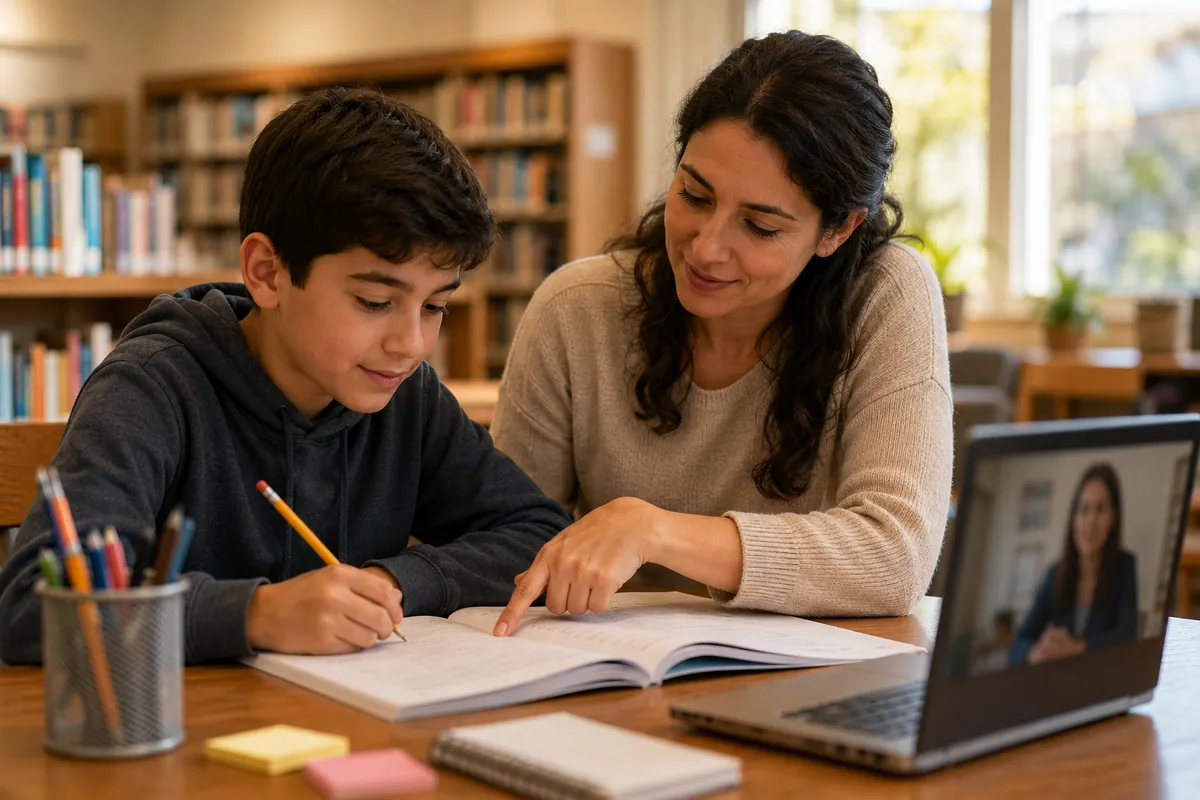
Online vs in-person tutoring: for most motivated students online works just as well and costs less, but young kids, easily distracted learners, and hands-on subjects often do better face to face. The right answer depends on the student, not the trend.
I've taught both ways for years. I ran in-person sessions at kitchen tables long before video tutoring was normal, and these days more than half my students are online. I've watched the same kid thrive in one format and struggle in the other. So instead of telling you online is the future or that nothing beats sitting beside a student, let me give you the real trade-offs and a way to decide for your own situation.
The Quick Comparison
| Factor | Online | In-person |
|---|---|---|
| Cost | Usually 10 to 30% cheaper | Higher (drive time, overhead) |
| Convenience | High, no travel either way | Lower, someone commutes |
| Tutor selection | The whole country | Only who's local |
| Focus for young kids | Harder to hold | Easier |
| Hands-on subjects | Workable but clunky | Better |
| Scheduling flexibility | Very flexible | More rigid |
| Tech required | Yes, real setup needed | None |
That table is the summary. The rest of this article is where each line actually matters, because the averages hide a lot.
Cost: Online Usually Wins
When I tutor in person, I'm pricing in drive time and gas. A 30-minute commute each way means a one-hour session eats two hours of my day, and that's reflected in the rate. Online, I can run back-to-back sessions with no travel, so I can charge less and still earn the same per hour of my time.
Across the board, online tends to run 10 to 30 percent cheaper for the same quality of tutor. For families on a budget, that gap adds up fast over a semester. I break down the full pricing picture in how much a tutor costs in 2026, but the short version: if money is tight and the student can focus on a screen, online stretches your dollar.
Tutor Selection: Online Opens the Whole Country
This is the most underrated advantage of online, and it's huge. In person, you're limited to tutors within driving distance. If you live in a small town and your kid needs AP Physics help, the local pool might be zero people.
Online, you can work with the right specialist no matter where they live. A student in rural Montana can get the same organic chemistry tutor as a kid in Boston. For common subjects this matters less, but for anything specialized, online isn't just cheaper, it's the only way to reach the person who can actually teach it. Online learning has become a normal part of education rather than a fringe option, a shift the National Center for Education Statistics documents in its data on distance and online coursework, so a tutor who works well over video is no longer the compromise it once felt like.
Focus and Accountability: It Depends on the Student
Here's where I get honest, because this is the real dividing line.
Some students focus better online. Older, self-directed teens often like it: no awkward small talk, screen sharing makes it easy to work through a problem set together, and they're comfortable on video. I have high schoolers who are sharper online than they ever were across a table.
Other students fall apart online. Younger kids especially. A second grader will find the cat, the doorbell, and seventeen other things in a video session. The physical presence of a tutor sitting beside them is itself a focus tool, a gentle "we're working now" that a webcam can't fully replicate. If your child is young or struggles to self-regulate, in-person earns its higher price.
A good online tutor manages this actively: shared digital whiteboard, frequent check-ins, asking the student to work problems live instead of passively watching. But not every tutor does that well, and not every kid responds. Know your child.
The Tech You Actually Need for Online
Online tutoring lives or dies on the setup. I've lost the first ten minutes of too many sessions to a kid whose microphone wasn't working. Bad audio is the number one killer of online tutoring, more than video, more than internet speed. If the tutor and student can't hear each other clearly, nothing else matters.
Here's the realistic minimum:
- A decent headset. This is the single highest-impact purchase. Laptop speakers and mic create echo and cut out. A simple wired USB headset with a boom mic makes the student clearly audible and helps them focus, since the audio goes straight to their ears.
- A reliable webcam. Many laptop cameras are grainy and badly angled. For sessions where the tutor needs to see the student's work or face clearly, an external 1080p webcam is a cheap upgrade that pays off.
- A way to show work. This is the big one for math and science. The student needs to share what they're writing. Some use a tablet and stylus. A low-tech option I love: a small handheld whiteboard the student writes on and holds up to the camera. It keeps them physically writing, which matters for retention, instead of just watching the tutor type.
You don't need a studio. You need clear audio and a way to share work. Get those two right and online tutoring is genuinely as good as the room.
Which Subjects Suit Each Format
After years of both, here's my honest sort.
Online works great for:
- Math at all levels, as long as both sides can share written work
- Reading comprehension and writing (screen sharing a document is ideal for editing together)
- Test prep, especially the digital SAT, which is taken on a screen anyway
- Foreign language conversation
- Most high school and college academic subjects
In-person tends to be better for:
- Young children, for the focus reasons above
- Hands-on lab science and anything with physical materials
- Students with significant attention or learning differences who need close presence
- Early reading with a child who needs a finger pointing at the page beside them
This isn't absolute. I've taught early reading online with engaged parents in the room and it worked. But if I had to bet, that's how the odds run.
A Simple Way to Decide
Forget the trend. Answer these four questions honestly:
- Can the student focus on a screen for 45 minutes? If yes, online is on the table. If no, lean in-person, especially for young kids.
- Is the subject specialized or hard to find locally? If yes, online opens up tutors you simply can't reach otherwise.
- Is budget tight? Online usually saves money for equal quality.
- Will someone set up and maintain the tech? Online needs a working headset and a way to share work. If nobody will manage that, the sessions will frustrate everyone.
If you land mostly on the online side, great, you'll save money and have more tutors to choose from. If the student is young or easily distracted, pay for in-person and consider it money well spent. There's no shame in either, and plenty of families do a mix: in-person for the young one, online for the teen.
What Changes With the Student's Age
I want to add one more layer, because age shifts the answer more than any other single factor.
For elementary kids (roughly K through 5), I lean in-person unless circumstances force otherwise. At that age, a tutor's physical presence is half the teaching. The kid stays on task because a grown-up is sitting right there, and early skills like reading and number sense benefit from hands-on materials, pointing at the page, manipulatives on the table. Online can work with a parent in the room running interference, but it's swimming upstream.
For middle schoolers (6 through 8), it's genuinely a toss-up and comes down to the individual kid. Some have the focus for online; some still need the room. This is the age where I tell parents to try one online trial session and watch honestly. The kid will tell you fast.
For high schoolers and college students, I default to online unless there's a specific reason not to. They're comfortable on video, they can self-regulate, screen sharing suits the work, and the cost savings and wider tutor pool are real advantages at exactly the age when subjects get specialized. The digital SAT is taken on a screen, so prepping for it on a screen is a feature, not a compromise.
None of this is a rule you can't break. I've had focused fourth graders who did fine online and distractible sophomores who needed a person beside them. But if you don't know your kid's pattern yet, age is a decent first guess.
Frequently Asked Questions
Is online tutoring as effective as in-person?
For a motivated student who can focus on a screen, yes, online works just as well and usually costs less. The format matters far less than the tutor. Where online struggles is with young kids and easily distracted learners, for whom a tutor's physical presence is itself a focus tool that a webcam can't fully replace. A good online tutor closes that gap with a shared whiteboard, frequent check-ins, and having the student work problems live instead of passively watching.
Is online tutoring cheaper than in-person?
Generally yes, by about 10 to 30 percent for the same quality of tutor. The tutor saves drive time and overhead, so they can charge less and still earn the same per hour of their time. Over a full semester that gap adds up, which makes online the budget-friendly choice when the student can focus on a screen. I break down the full pricing picture in how much a tutor costs in 2026.
Which subjects work better in person?
In-person tends to win for young children, hands-on lab science and anything with physical materials, students with significant attention or learning differences who need close presence, and early reading where a child benefits from a finger pointing at the page beside them. Online works great for math at all levels, reading and writing, test prep including the digital SAT, foreign language conversation, and most high school and college academic subjects.
Does my child's age change which format is better?
Yes, age shifts the answer more than any other single factor. For elementary kids I lean in-person, because a tutor's physical presence is half the teaching at that age. For middle schoolers it's genuinely a toss-up that comes down to the individual kid, so try one online trial and watch honestly. For high schoolers and college students I default to online, since they self-regulate, screen sharing suits the work, and the cost and selection advantages are real.
What equipment do I need for online tutoring?
Less than you'd think, but get the essentials right. Clear audio is non-negotiable and the single highest-impact purchase, so a simple USB headset with a microphone beats laptop speakers that echo and cut out. A reliable 1080p webcam helps the tutor see the student's work, and a low-tech handheld whiteboard the student writes on and holds to the camera keeps them physically writing. You need clear audio and a way to share work, not a studio.
How do I decide between online and in-person tutoring?
Answer four questions honestly: Can the student focus on a screen for 45 minutes? Is the subject specialized or hard to find locally? Is budget tight? Will someone set up and maintain the tech? If you land mostly on the online side, you'll save money and have more tutors to choose from. If the student is young or easily distracted, pay for in-person. Plenty of families do a mix, with in-person for the young one and online for the teen.
What I'd Tell a Parent Asking Me
Online tutoring has earned its place. For a focused student, it's cheaper, more flexible, and opens up the right specialist no matter where you live. For a young or distractible kid, in-person presence is worth paying for. The format matters less than the tutor, though, so once you've decided which way to lean, put your energy into finding a good tutor who fits your child. And if you're still weighing whether to spend at all, my piece on whether tutoring is worth it is the honest gut check.
When you're ready, you can browse tutors in our directory, filter for online or local, and see services up front instead of guessing.